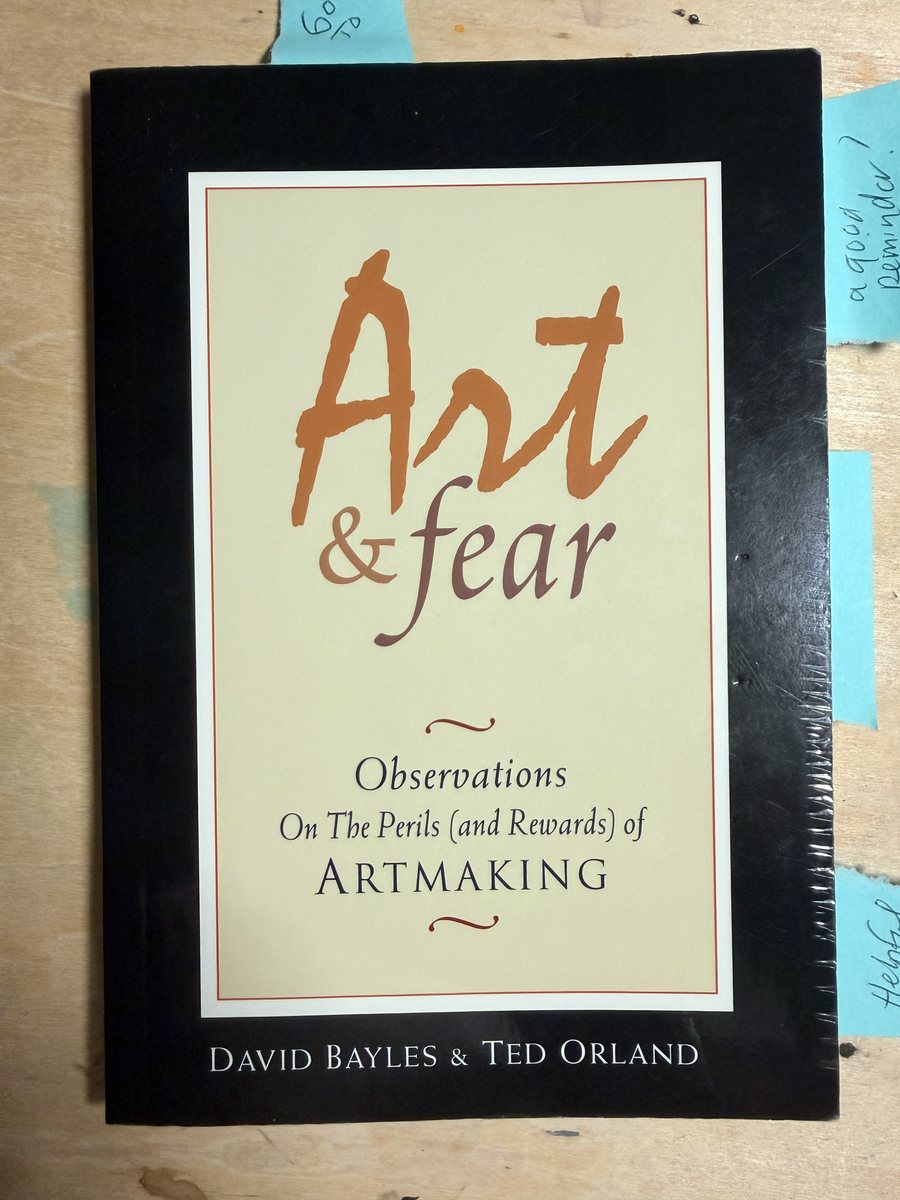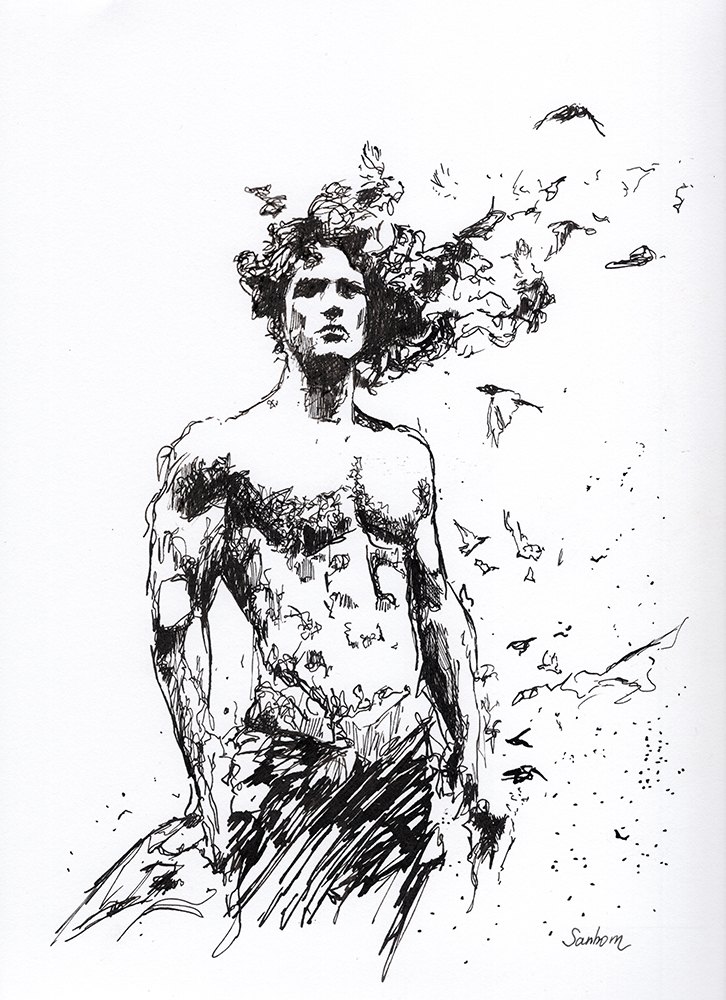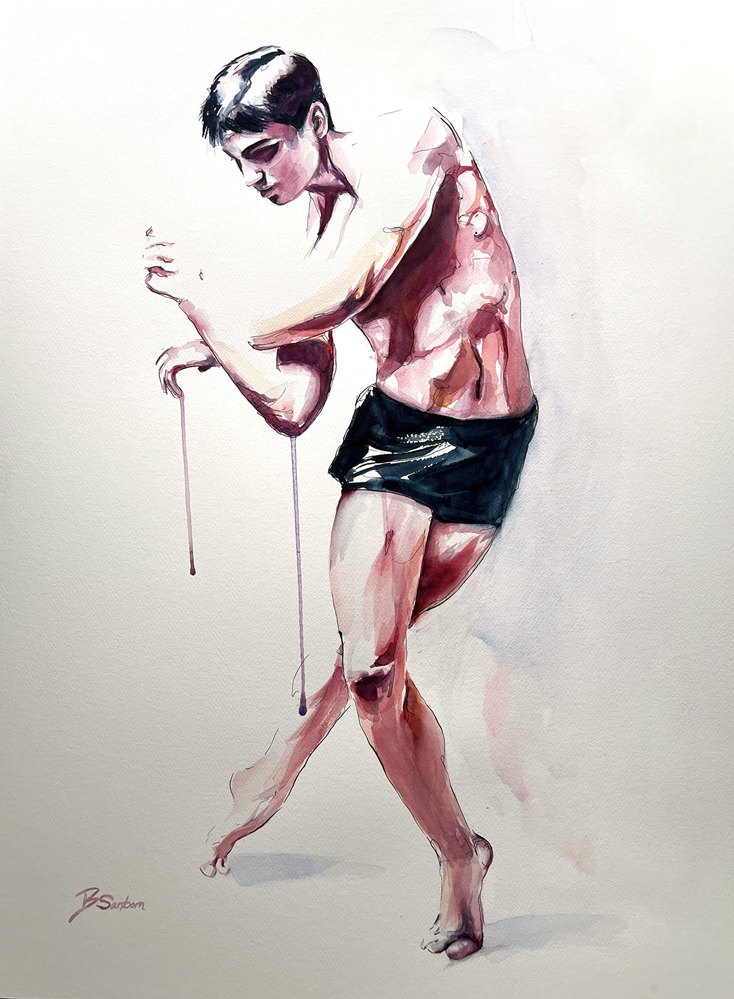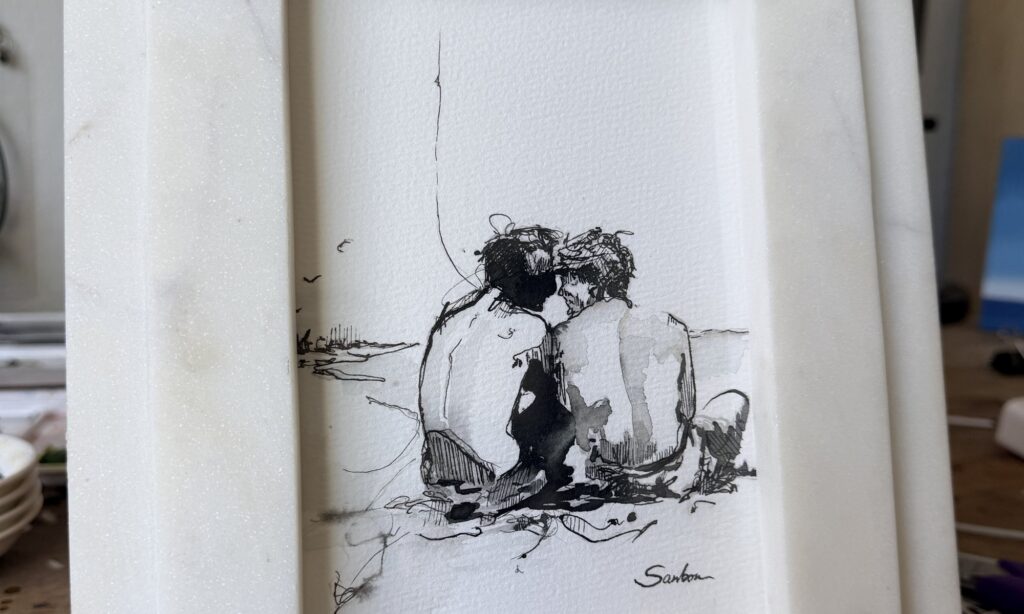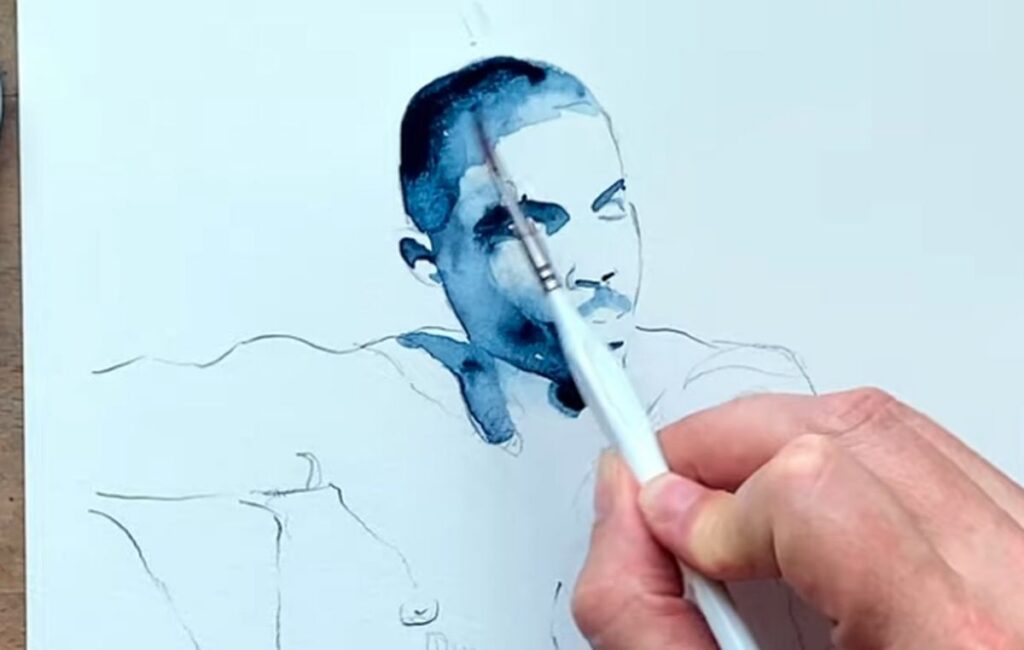

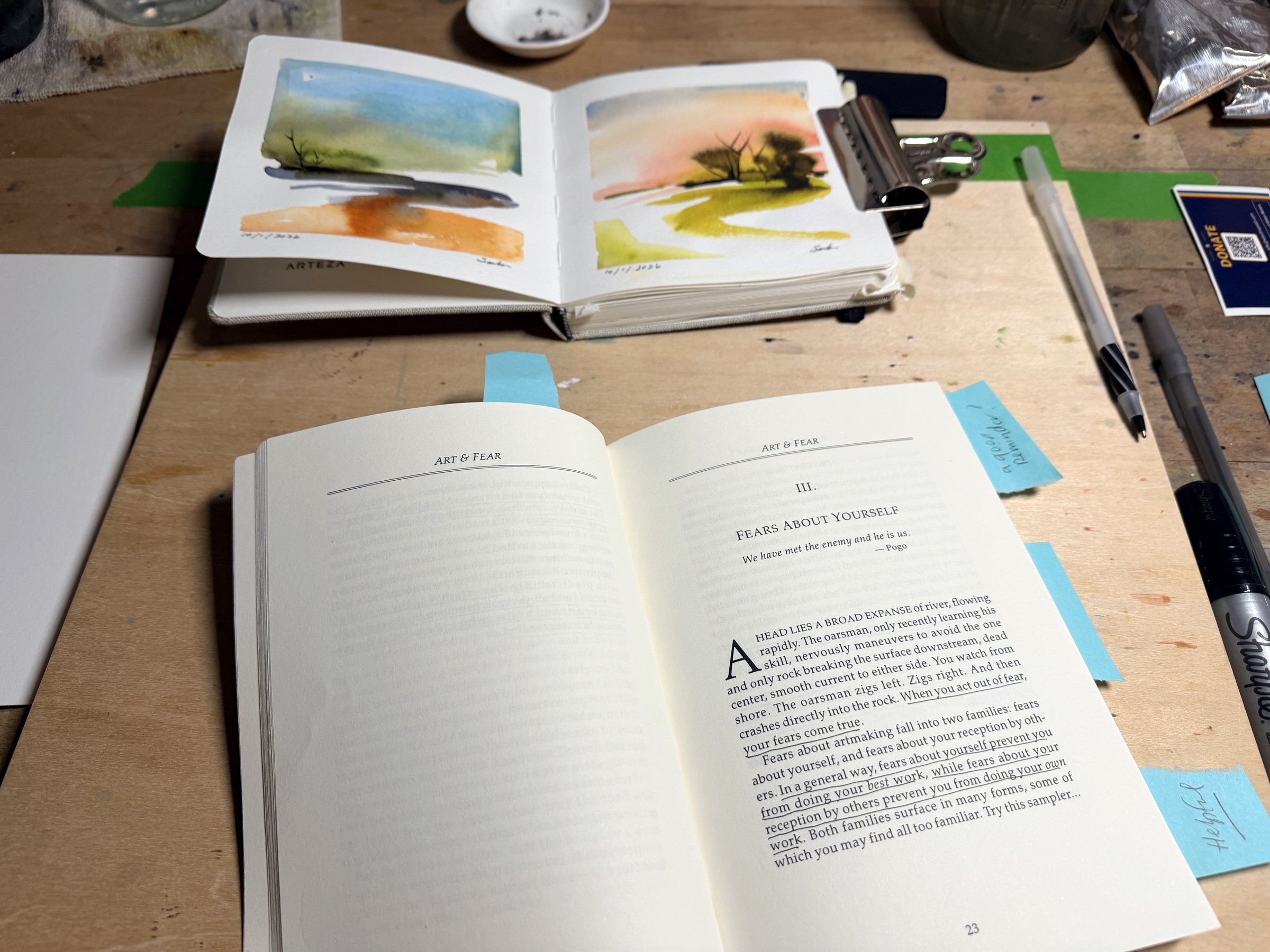
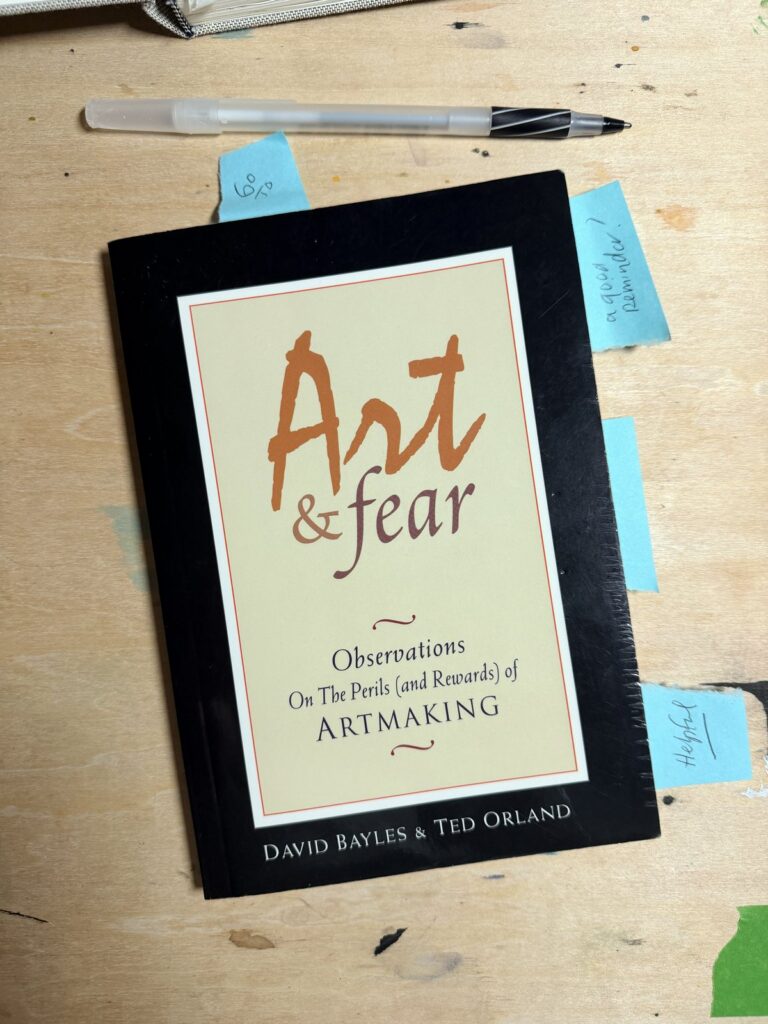
There’s one book I keep within arm’s reach in my studio. From the outside it looks surprisingly new for how many times I’ve read it. Open it up and it’s a different story: underlined, dog eared and stuck full of sticky notes. It’s Art & Fear by David Bayles and Ted Orland, and it showed up in my life exactly when I needed it.
When I was stuck
I grew up in Exeter, New Hampshire, went to school in Savannah, and then bounced around for years. Boston, a short and terrible job in Florida, nine months in Miami Beach back in 1999, then back to New England. Eventually I landed in Maine.
Maine is where I got stuck. I was in a relationship I wasn’t happy in. I didn’t know where my life was going. And I wasn’t painting, not really. Not consistently, and not with the kind of vision I used to have.
One of my best friends, Kelly Jo Shows, is one of the most talented painters I know. She works in all kinds of mediums, mostly oil. I lived close by, so I was at her studio in Kennebunk two or three times a week. I’d sit with her while she painted, and I got to spend time with her partner Heather too, an amazing textile and pattern designer.
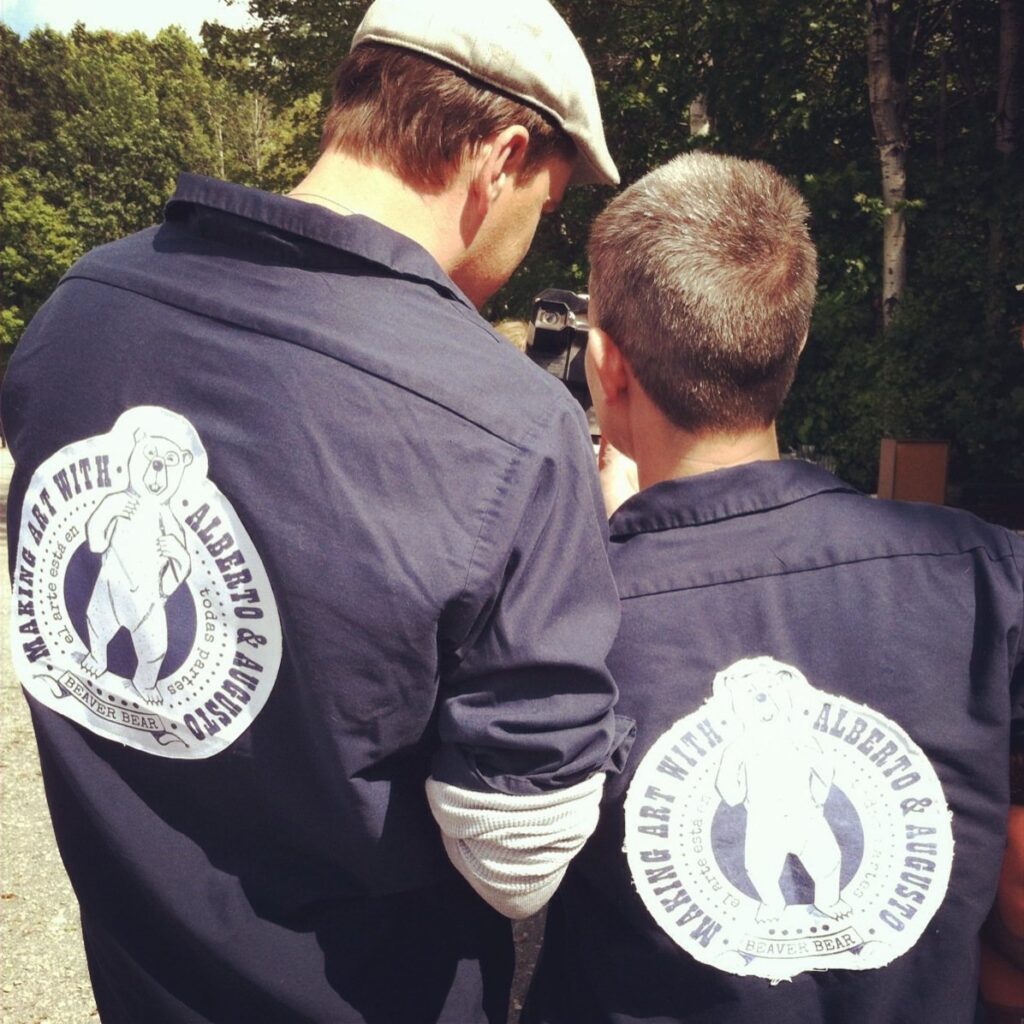
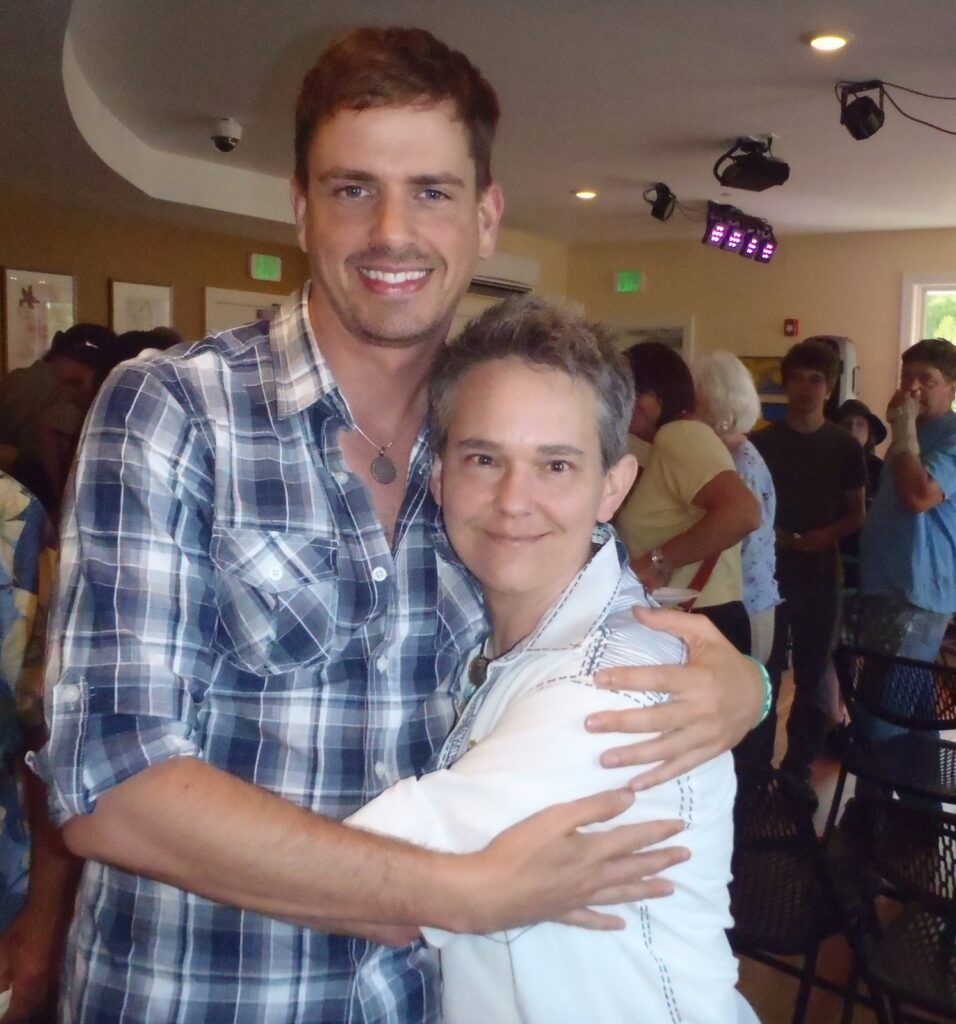
Every couple of months, Kelly and I would make a trip to Books a Million up in Portland. It was one of our things. On one of those days, I happened to be telling her how frustrated I was with my art, how stuck I felt.
Somewhere in the store she found it, put it in my hands and said, “This book helped me. I think it’s going to help you.”
She was right. She usually is.
Read in an afternoon, then read again
It’s a short book. I read the whole thing in one afternoon, and then I read it again. Something clicked. I didn’t leave Maine right away, but that afternoon started the dominoes that led me to where I am now.
Early on there’s a list of the doubts that run through every artist’s head. Things like I’m not an artist. I’m a phony. Other people are better than I am. No one understands my work. Reading them in print felt like someone had been listening to my thoughts. I wasn’t the only one.
The line I come back to
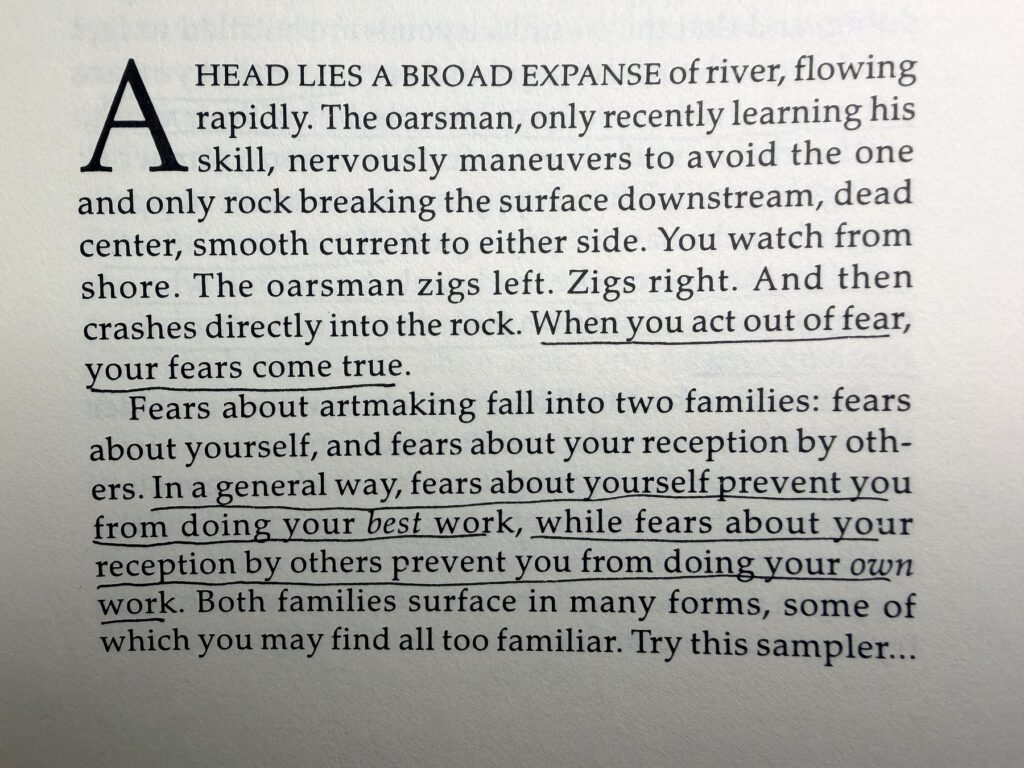
The part that helped me most is in the chapter about fears about yourself. It’s one short idea, and I’ve underlined it more than once:
When you act out of fear, your fears come true.
The book goes on to split those fears into two families: fears about yourself, and fears about how others will receive your work. Fears about yourself keep you from doing your best work. Fears about others keep you from doing your own work. That difference changed how I look at almost everything I make.
What it covers
Pretty much everything an artist goes through. Feeling like a fraud. Wondering if you’re actually talented. Hating a painting so much you destroy it, when someone else might have loved it. The fear of showing your work, because art is personal, and putting it out there means putting a piece of yourself out there. Wanting approval. Finding time to make the work at all. Competitions, galleries, and whether you’re good enough to try.
And one I think about a lot now: the fact that what you loved painting ten years ago might not be what you love painting today. You find your work, then you find it again, and then again. That’s normal. That’s the job.
It makes me think of musicians who get known for one sound, then try something new and everyone says, “No, stay in your lane.” Writers deal with it too. The book doesn’t mention that exactly, but it gave me permission to keep changing anyway.
Who should read it
Every artist. I really believe it should be required reading in art school, and a staple on every studio shelf. If you’re stuck, or scared, or wondering if you’re allowed to call yourself an artist, start here.
As an Amazon Associate I earn from qualifying purchases. If you pick up the book through my link, it costs you nothing extra and helps keep this studio going.
I still go back to it whenever I feel a little off. I’ll sit with it for an afternoon and it brings me right back to myself. All those fears about who I think I am, or whether I’m allowed to change my style, are just part of being an artist. Thank you, Kelly, for handing it to me.